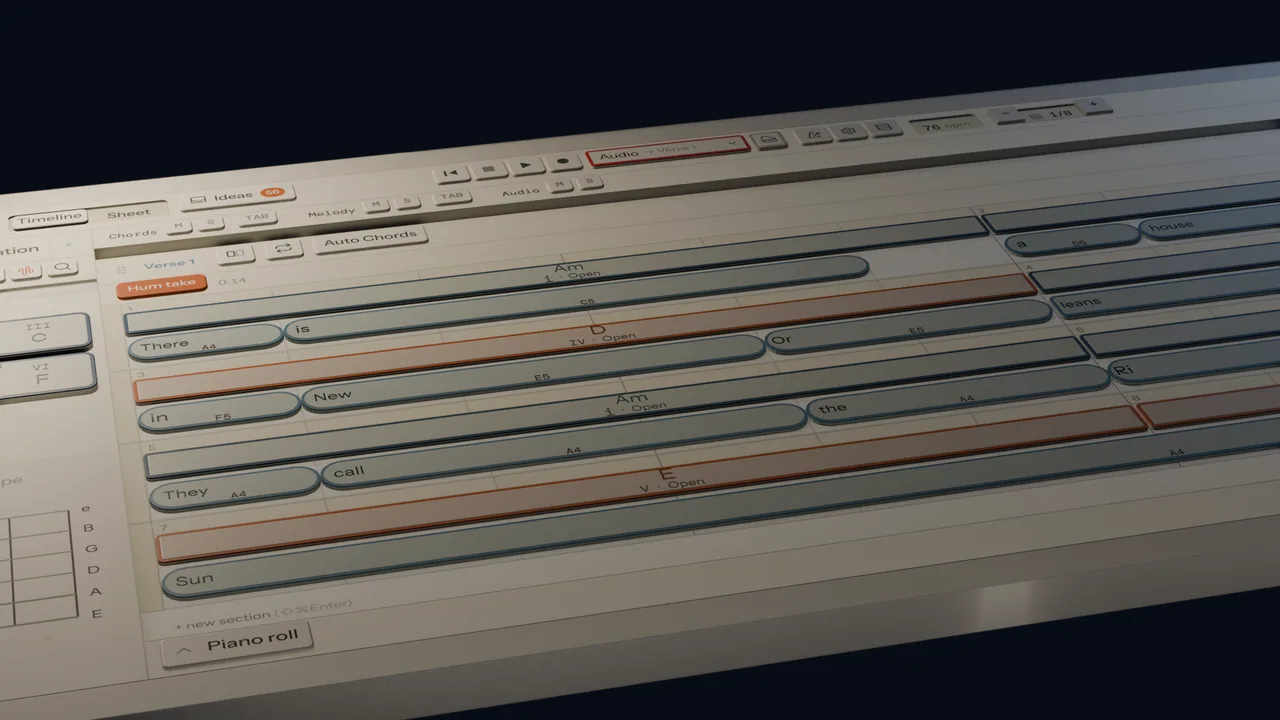
The First Noel chords in D are D, G, A, Bm and Em, with A7 and one F♯m, and the same chart works on guitar, piano and ukulele. If you'd rather keep it simple, D, G and A7 will carry the whole song. Below are the chords over the words, the piano notes, the song in every common key, and the old argument that this melody began life as a harmony part.
The chart follows the four-part harmony in The Methodist Sunday School Hymnal of 1911, simplified to at most one chord per syllable. D is the key current hymnals print, and on guitar it's nearly all open shapes.
The short version
Seven chords in D: D, G, A, A7, Bm, Em, F♯m, all from the D major scale. Three of them, D, G and A7, are enough for an easy version. The tune is in 3/4, starts with a pickup on "The," and spans one octave, from the D above middle C to the D above that. Its only black keys on the piano are F sharp and C sharp.
What chords are in The First Noel?
The First Noel uses seven chords, all from the key of D major: D, G, A, A7, Bm, Em and F♯m. D carries most of the song, G and A7 do most of the rest, and Bm, Em and F♯m come in for a beat or two at a time.
Nothing here leaves the key. Every note of all seven chords belongs to the D major scale, including the G that turns A into A7. So there's no surprise chord to learn, and the changes come from the same small set in every line.
| Chord | In D | Piano notes | Where it comes |
|---|---|---|---|
| D | 1 (home) | D, F♯, A | "first," "angel," "say," "certain," the last "-el" |
| G | 4 | G, B, D | "did," "Was to," "-herds," the end of the third "Noel" |
| A | 5 | A, C♯, E | "-el" in the first line, "they" in "where they lay" |
| A7 | 5 (with a 7th) | A, C♯, E, G | "in," "they" in "as they lay," "so," the refrain's first "No-" |
| Bm | 6 | B, D, F♯ | "No-" in the first line, "where," "Born" |
| Em | 2 | E, G, B | "the," "poor," "lay," "winter's" |
| F♯m | 3 | F♯, A, C♯ | The second "Noel" in the refrain, once |
The same chords work on guitar, piano and ukulele. Every verse uses the same chords in the same places.
The First Noel lyrics and chords
These are the words as most current hymnals print them, with "Noel" where some print "Nowell," and with chords in D. Each chord sits on the syllable where it changes and rings until the next one. Every verse uses the same chords, and the refrain follows each verse.
Verse 1 and refrain (3/4, key of D)
[D]The first [Bm]No-[A]el [Em]the [D]an-gel [G]did [D]say
[G]Was to [D]cer-tain [Em]poor [D]shep-[G]herds [A7]in [D]fields as [A7]they [D]lay;
[A7]In [D]fields [Bm]where [A]they [Em]lay, [D]keep-ing [G]their [D]sheep,
[G]On a [D]cold win-[Em]ter's [D]night [A7]that [D]was [A7]so [D]deep.
[A7]No-[D]el, [Bm]No-[F#m]el, [D]No-[G]el, No-[D]el,
[Bm]Born [D]is [G]the [D]King [A7]of [D]Is-[A7]ra-[D]el.
Verses 2 to 6 (sing the refrain after each)
They looked up and saw a star
Shining in the east, beyond them far;
And to the earth it gave great light,
And so it continued both day and night.
And by the light of that same star
Three wise men came from country far;
To seek for a king was their intent,
And to follow the star wherever it went.
This star drew nigh to the northwest,
O'er Bethlehem it took its rest;
And there it did both stop and stay
Right over the place where Jesus lay.
Then entered in those wise men three,
Full reverently upon their knee,
And offered there in his presence
Their gold and myrrh and frankincense.
Then let us all with one accord
Sing praises to our heavenly Lord,
That hath made heaven and earth of nought,
And with his blood our life hath bought.
The verses don't share a syllable count. "They looked up and saw a star" has seven syllables to fill the same music that "The first Noel the angel did say" fills with nine, so keep the chords on the beats and let the words stretch. The oldest copies have nine verses. The Hymnal 1982 and Glory to God print the six above, while Evangelical Lutheran Worship and The United Methodist Hymnal stop at five.
How do you play The First Noel on guitar?
The First Noel guitar chords in D are D (xx0232), G (320003), A (x02220), A7 (x02020), Bm (x24432), Em (022000) and F♯m (244222), counting strings from the low E. Count 1, 2, 3 and start singing "The" on beat 3.
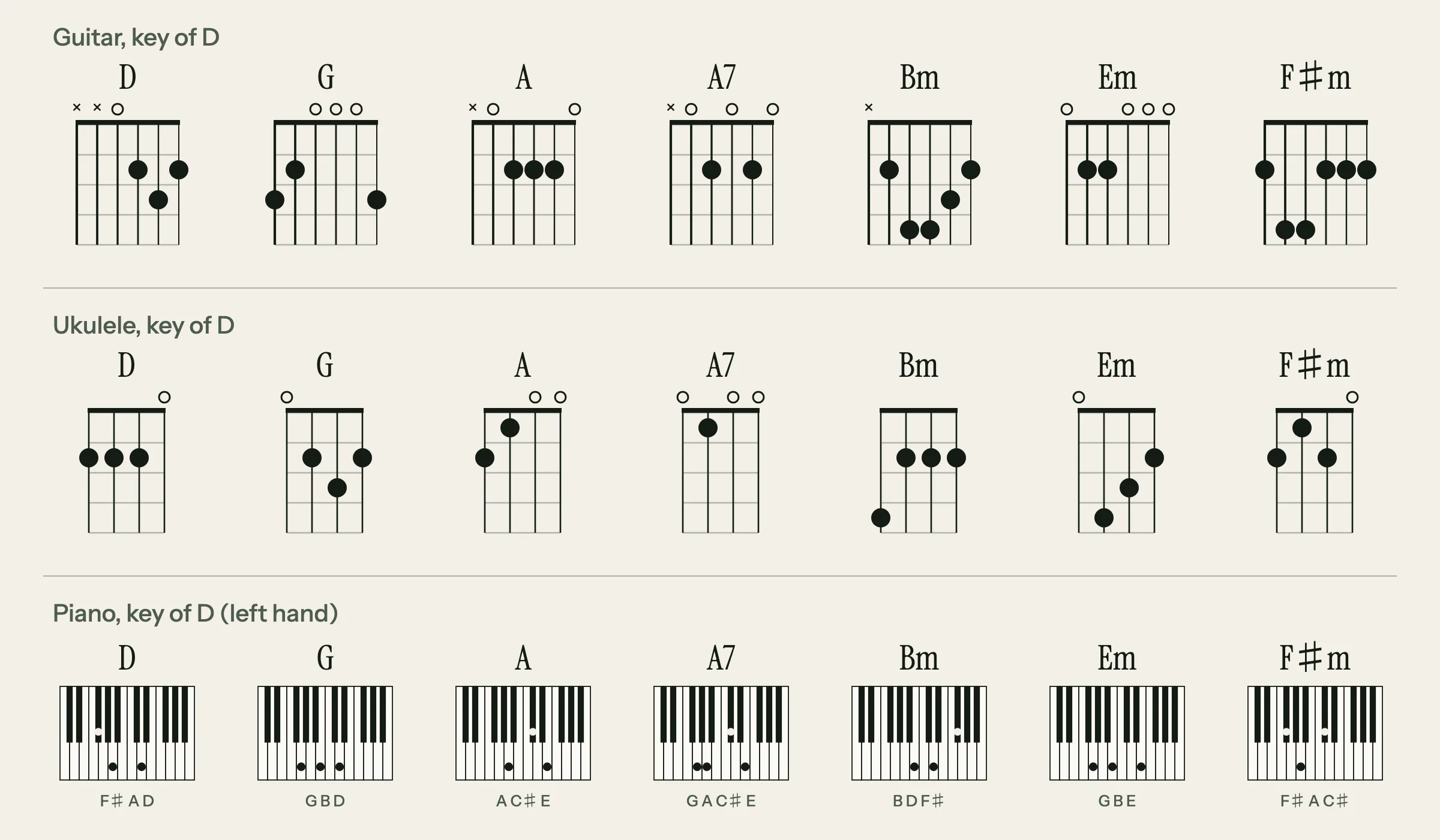
Because the song is in 3/4, try a bass note on beat 1 and a strum on beat 2, then change for beat 3, where the chord moves in nearly every bar. Long notes like "-el" and "say" hold for two beats, which leaves time for the next change.
How do you play The First Noel with three chords?
Play it with D, G and A7 alone. Use G wherever the chart says Em, D wherever it says Bm, and A7 wherever it says A or F♯m. Each swap keeps the note the tune is singing at that spot: G has the B that Em supports, D has the F sharp and D that Bm supports, and A7 has the A. It loses a little color and none of the song, and it skips both barre chords. If you want to keep Bm without the barre, Bm7 (x20202) works too.
What is the bass walk-up in the refrain?
Once the three chords feel easy, add the walk-up the 1911 harmony puts between the third and fourth "Noel." On the G chord, pick the low G, then walk up single notes: open A, then B and C sharp on the A string, into an open D on the last "-el." It takes one bar.
To sing higher, a capo on the second fret turns the same shapes into E, and on the third fret into F; the guitar capo chart has every fret. If your strumming hand stops whenever you start singing, how to sing and play guitar at the same time covers why and how to fix it.
What are the piano notes for The First Noel?
The First Noel piano notes in D start on the F sharp above middle C: F♯ E D E F♯ G A B C♯ D C♯ B A, "The first Noel the angel did say." F sharp and C sharp are the only black keys the tune uses. The left hand plays the chords from the table above.
The First Noel: piano notes (right hand, key of D)
The first Noel the angel did say: F♯ E D E F♯ G A B C♯ D C♯ B A
Was to certain poor shepherds in fields as they lay: B C♯ D C♯ B A B C♯ D A G F♯
In fields where they lay, keeping their sheep: F♯ E D E F♯ G A B C♯ D C♯ B A
On a cold winter's night that was so deep: B C♯ D C♯ B A B C♯ D A G F♯
Noel, Noel, Noel, Noel: F♯ E D E F♯ G A D C♯ B B A
Born is the King of Israel: D C♯ B A B C♯ D A G F♯
Only the third note of the first, third and fifth lines is the low D. Every other D is the high one, an octave up. More notes than syllables is normal here: "The" and "first" each take two notes.
The song is almost all repeats. Lines one and three are identical, so are lines two and four, and the last line is line two without its first two notes. Learn two lines, then the first half of the "Noel" line is already in your fingers, too.
For the left hand, play the bass note on beat 1 and the rest of the chord on beat 2, then move to the next chord on beat 3, where it changes in nearly every bar. If you'd like to avoid black keys, C works well: the first line becomes E D C D E F G A B C B A G, and the chords become C, F, G, G7, Am, Dm and Em, all on white keys.
What are the ukulele chords for The First Noel?
The First Noel ukulele chords in D are D (2220), G (0232), A (2100), A7 (0100), Bm (4222), Em (0432) and F♯m (2120), where the numbers are frets on the G, C, E and A strings in that order.
D (2220) is a tight fit for three fingers on one fret, and many players barre it or use one finger across the strings. Em is a stretch for some hands; 0402, with the E string open, has the same three notes. The three-chord version works here too: D, G and A7 (0100), which is one finger.
The key of C is easier on the ukulele, and it puts the tune's lowest note on the open C string: C (0003), F (2010), G (0232), G7 (0212), Am (2000), Dm (2210) and Em (0432). The three-chord version in C is C, F and G7.
The First Noel chords in every key
The First Noel works in any key with the same seven chords. Its lowest note is the key note and its highest is that same note an octave up, so pick the key whose range fits your voice and read the chords across.
| Key | Chords, in the same order as D | Lowest and highest note (middle C is C4) | Guitar shapes |
|---|---|---|---|
| G | G, Em, D, Am, C, D7, Bm | G3 up to G4 | Open (Bm is a barre) |
| A | A, F♯m, E, Bm, D, E7, C♯m | A3 up to A4 | G shapes, capo 2 |
| B♭ | B♭, Gm, F, Cm, E♭, F7, Dm | B♭3 up to B♭4 | G shapes, capo 3 |
| C | C, Am, G, Dm, F, G7, Em | C4 up to C5 | Open (F is a barre) |
| D | D, Bm, A, Em, G, A7, F♯m | D4 up to D5 | Open (Bm and F♯m are barres) |
| E♭ | E♭, Cm, B♭, Fm, A♭, B♭7, Gm | E♭4 up to E♭5 | D shapes, capo 1 |
| E | E, C♯m, B, F♯m, A, B7, G♯m | E4 up to E5 | D shapes, capo 2 |
| F | F, Dm, C, Gm, B♭, C7, Am | F4 up to F5 | D shapes, capo 3 |
The order is 1, 6-, 5, 2-, 4, 5⁷, 3-. Men singing the tune sing it an octave lower than written.
In Nashville numbers the opening reads 1, 6-, 5, 2-, 1, 4, 1, and that doesn't change from key to key. The Nashville Number System post explains how to read it.
What key should a group sing The First Noel in?
D is the key current hymnals use, and it fits most groups: the tune runs from the D above middle C up to the D an octave higher, D4 to D5. C (C4 to C5) is a step lower and easier for deep voices.
Evangelical Lutheran Worship (2006), The United Methodist Hymnal (1989), The Hymnal 1982, Glory to God (2013) and Celebrating Grace (2010) all print it in D. Some chord sites print it in G, which is an easy key for guitar but sits a fifth lower, G3 to G4, and that's low for many voices.
The whole range shows up in the first line. The low D comes on "first" and the high D comes on "an-" of "angel," so one line tests the key completely. If "angel" strains, drop to C; if "first" is too low to hear, go up to E.
If you're leading and want to check your own range first, the free vocal range test finds your lowest and highest notes and suggests keys that fit, with guitar capo frets.
Why doesn't The First Noel end on its key note?
The tune never ends a phrase on D, its key note. "Lay," "deep" and "Israel" all land on F sharp, the third note of the scale, and the D chord underneath is what makes them sound finished. Folk-song scholars spent decades arguing over where such an odd tune came from, and one answer is that it began as a harmony part.
Melodies usually come to rest on the key note. This one, as Wikipedia describes it, is one phrase sung twice and a refrain that varies it, and all three end on the third. The chords do the finishing: A7 to D is an authentic cadence, and it still sounds final with the third on top.
In 1915, Annie Gilchrist proposed in the Journal of the Folk-Song Society that the tune came from a treble harmony part, passed down by ear until people remembered it as the melody. That would fit the endings, since a harmony part can sit on the third while another voice takes the key note. The hymn scholar Erik Routley liked the idea too, and people went looking for the missing tune.
The editors of The New Oxford Book of Carols (1992) called off the search. According to the Hymnology Archive, they wrote that "the missing tune was a chimera and Sandys's tune is in fact the 'descant' to itself," a merging of parts of a Camborne carol's tune with the upper parts of lost gallery settings, in choirs where many singers learned their parts by ear.
Why does the refrain sound bigger when the melody barely moves?
From the "-el" of the third "Noel" to the end of the fourth, the melody sings only B, B, A, so the lift comes from the voices underneath. In the 1911 harmony this chart follows, the tenor and bass climb together a third apart from the third "Noel" into the fourth, where the tenor reaches a high F sharp.
The bass walks up G, A, B, C sharp to D while the tenor walks up B, C sharp, D, E to F sharp. That's the move guitarists can copy with the walk-up above, and on piano the left hand can play it in octaves.
Accounts of John Stainer's arrangement single out the same two things. The Hymnology Archive quotes the hymnologist Alan Luff on his "inspired movement upwards in thirds in the first half of the refrain," and the United Methodist hymn history says tenors look forward to the high F sharp on the final "Noel," leaving sopranos on the original tune. If you have two singers, give the second one that tenor line; how to write vocal harmonies covers what makes a part like that work.
Who wrote The First Noel?
Nobody knows. It's a traditional English carol with roots in Cornwall. The earliest copy the Hymnology Archive lists is a manuscript John Hutchens wrote out for Davies Gilbert around 1816 to 1817. Gilbert printed the words in 1823, and William Sandys printed the words and a tune in 1833.
The Hymnology Archive traces each step. The Hutchens manuscript, now in the Kresen Kernow archive in Cornwall, has nine verses and a melody in G whose phrases end on the second note of the scale. Gilbert reproduced those nine verses in the second edition of Some Ancient Christmas Carols but no tune. Sandys was the first to print a tune, in D with each pair of phrases ending on the third, in Christmas Carols Ancient & Modern. He named no source beyond filing the carol among those "obtained in different parts of the West of Cornwall," and the Archive notes that the often-repeated claim that he collected it there in 1827 comes without a citation.
The tune everyone sings now is Stainer's version from Christmas Carols New and Old. Sources differ on the date: the Hymnology Archive reproduces it from a First Series dated 1868, while Wikipedia and the Canterbury Dictionary of Hymnology give 1871. Older dates, back as far as the 13th century, get repeated widely, and the United Methodist history places the carol on 18th-century broadsides from Helston, citing The New Oxford Book of Carols.
What does Noel mean, and is it Noel or Nowell?
Noel and Nowell are the same word, the French and English spellings of a word for Christmas that was also shouted as a cry of joy. The Oxford English Dictionary's earliest English use is in Chaucer's Canterbury Tales, around 1395. Hymnals split on the spelling, and the carol is the same either way.
Evangelical Lutheran Worship and The United Methodist Hymnal print "Noel"; The Hymnal 1982, Glory to God and Celebrating Grace print "Nowell." Chaucer's line, quoted in the Hymnology Archive, is "And Nowel crieth euery lusty man." Gilbert explained the word in his 1823 preface by quoting a French dictionary: it "was shouted at all public festivals and solemnities," in the Archive's translation.
The story has its own wrinkle. Verse 2 has the shepherds looking up to see a star, but in the Bible the star belongs to the wise men in Matthew, and it doesn't appear in the shepherds' story in Luke. Sandys's text also says "three poor shepherds," which later became "certain poor shepherds." The Archive quotes the writer John M. Mulder, who traces the number three to medieval mystery plays.
How do you put The First Noel into Song Cage?
Song Cage shows a song as chords over the words, like a printed chord sheet, and moves the whole song to a new key in one step. Copy the chords and words from the chart above, paste them into a song in Sheet view, set the key to D and the meter to 3/4, then pick a new key from the key chip and choose Move song.
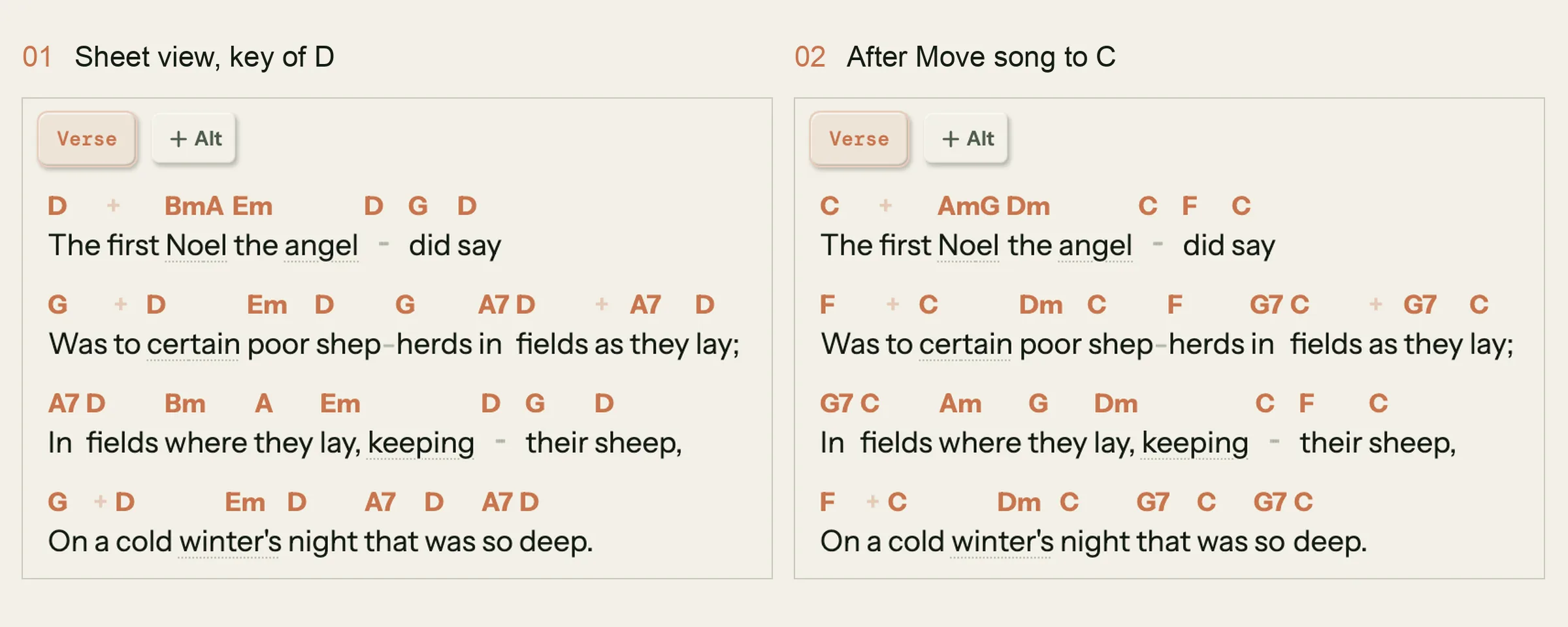
The refrain lands as a second section after the verse. Move song is how the chart in D becomes C for a lower group: every chord moves together and stays on its word. View > Nashville Numbers shows the chart as 1, 6-, 5, and View > Roman Numerals shows it as I, vi, V. Clicking a chord shows its guitar shape or piano keys, with a capo if you set one. The changing keys chapter covers Move song and Relabel.
To hear the words on the tune, add the melody by singing it in or entering the notes, and the Singer voice sings each syllable on its note. It sounds like an 80s talking computer played off an old cassette, rough but clear enough to hear how the words sit. For more carols in the same format, see O Come, O Come, Emmanuel chords, O Come All Ye Faithful chords and Hark the Herald Angels Sing chords.
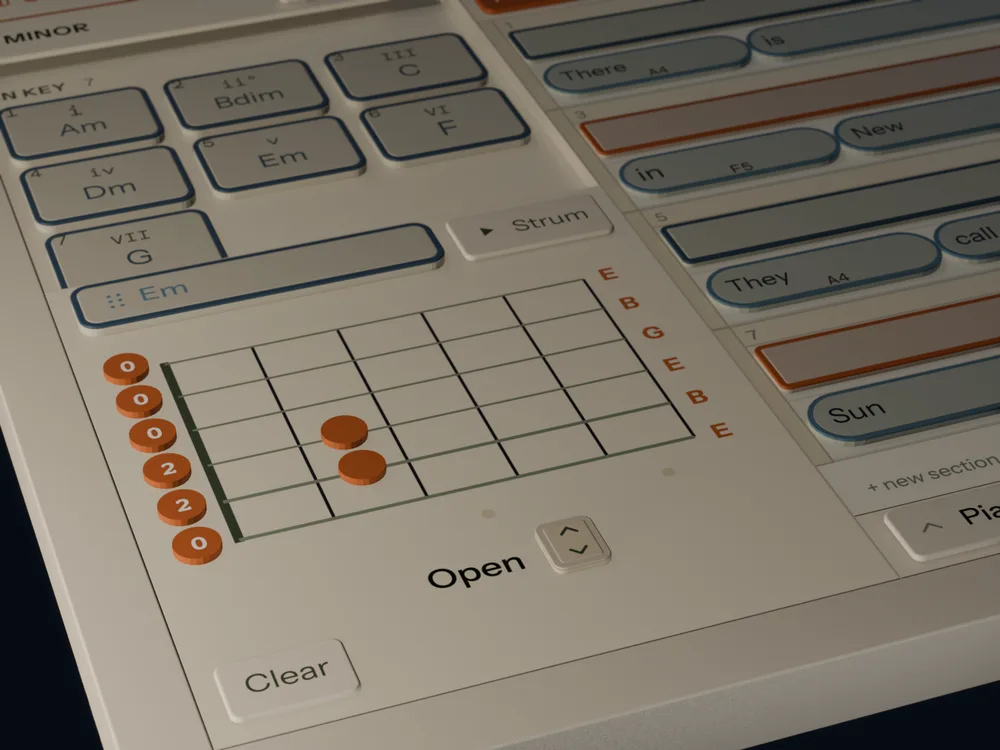
Play The First Noel in your key
Put the chords over the words in Song Cage, move the song from D to C or any other key, and see every chord as a guitar shape or as piano keys.
Frequently Asked Questions
What are the chords for The First Noel?
In D: D, G, A, A7, Bm, Em and F♯m. D carries most of the song, with G and A7 next. Bm comes on the "No-" of the first line and on "Born," and F♯m comes once, on the second "Noel" of the refrain.
What are the easy chords for The First Noel?
D, G and A7 are enough. Play G in place of Em, D in place of Bm, and A7 in place of A and F♯m. In the key of C, the same three-chord version is C, F and G7.
What key is The First Noel in?
D major in current hymnals, including Evangelical Lutheran Worship (2006), The United Methodist Hymnal (1989) and Glory to God (2013). The tune spans D4 to D5 in that key. C is a step lower for deep voices.
Is it The First Noel or The First Nowell?
Both are correct and they're the same carol. Nowell is the older English spelling, used by the 19th-century collections and by hymnals like The Hymnal 1982. Noel is the French spelling, used by hymnals like The United Methodist Hymnal.
Who wrote The First Noel?
Nobody knows. It's a traditional English carol. Davies Gilbert printed the words in 1823, William Sandys printed words and a tune in 1833, and John Stainer's later harmonization is the version most people sing.
Is The First Noel in the public domain?
Yes. The traditional words and tune, printed in 1823 and 1833, and Stainer's 19th-century harmony are all in the public domain. Newer descants, arrangements and recordings can still be under copyright.